
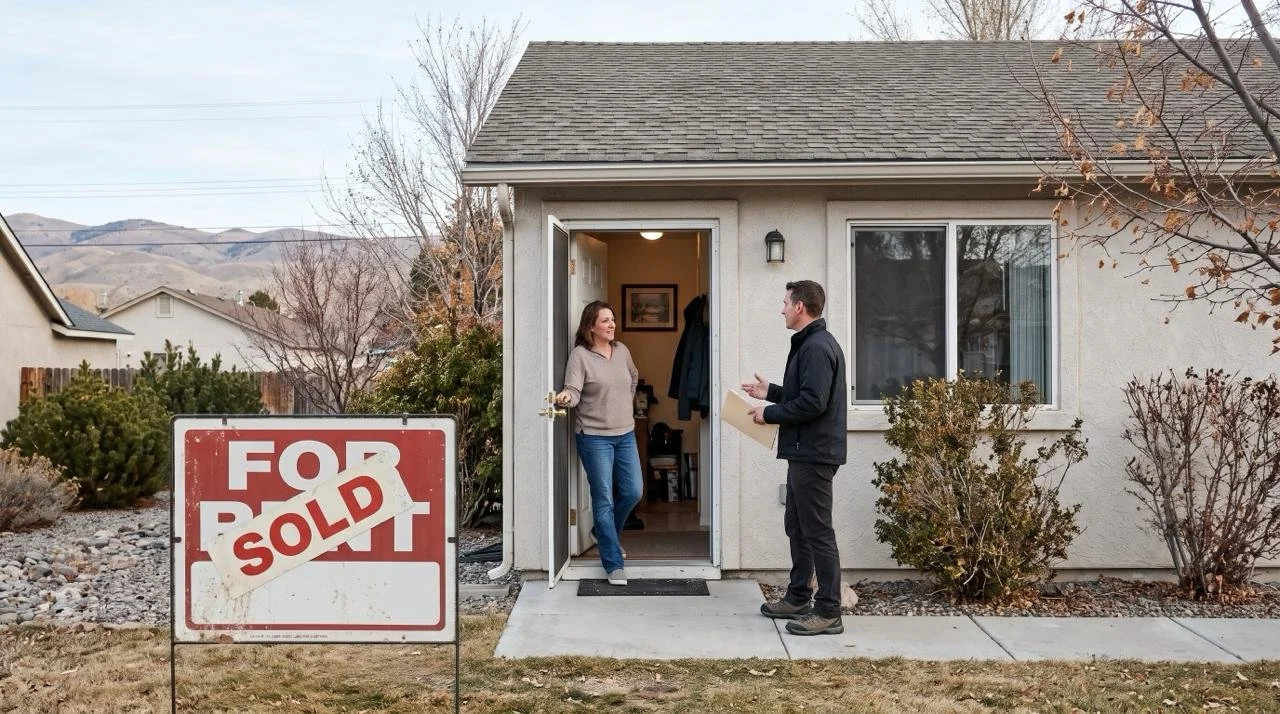
You are ready to sell your rental in Reno. The tenant pays on time, the lease still has months remaining, and a buyer wants to move in right after closing.
Can you simply give the tenant a move-out date because the house is being sold?
In an ordinary voluntary sale, Nevada law generally carries the existing rental agreement forward to the new owner. Selling the property and ending the tenancy are separate issues.[1]
That does not mean you cannot sell an occupied rental. It means the lease, the buyer’s plans, and the possession date need to fit together before you promise anything.
The Sale Does Not Automatically End the Lease
NRS 118A.349 addresses voluntary transfers and sales. Unless the new owner and tenant agree to modify or terminate the existing rental agreement, the new owner takes on the former landlord’s rights, obligations, and liabilities under it, and the tenant’s rights and responsibilities continue.[1]
Start with the complete lease file—not just the expiration date. Review amendments, renewal provisions, notices, deposits, prepaid rent, and any written agreements about occupancy or repairs.
A fixed-term lease and a month-to-month tenancy can require different planning. Do not assume that a month-to-month tenant must leave immediately, or that a fixed-term lease ends early merely because the buyer wants the house. Have a Nevada attorney or qualified property manager review the circumstances before making commitments; seek legal advice for disputed terms or termination questions.
This article is based on an ordinary sale. Foreclosure and other specialized situations involve different rules.
Decide Whether You Are Selling Occupied or Vacant
Selling with the tenancy intact may suit a buyer who intends to keep the property as a rental. That buyer needs reliable information about rent, lease terms, deposits, payment history, and maintenance obligations—not just an advertised income figure.
Planning a vacant sale may suit a buyer who intends to live there. But vacancy must be achievable through a lawful process or a genuinely voluntary, documented agreement with the tenant. A purchase contract between seller and buyer does not itself rewrite the tenant’s lease.
For example, imagine a Sparks rental with several months left on its lease. An investor willing to honor that tenancy may have a workable plan. A buyer who needs immediate possession has a different problem to solve. Neither a fast closing nor a strong offer removes the occupancy issue.
If the tenant is open to an agreed departure, have the agreement reviewed before relying on it. Address the actual surrender date, any negotiated payment, keys, property condition, and deposit accounting. Do not treat an informal conversation as a guaranteed vacancy.
Showings Still Need a Plan
An occupied property is someone’s home, even while it is for sale.
Nevada law permits access for legitimate purposes, including showing the dwelling to prospective purchasers, and tenants may not unreasonably withhold consent. It also prohibits abusing access or using it to harass the tenant.[2]
Except in an emergency, the statute generally requires at least 24 hours’ notice and entry at reasonable times during normal business hours, unless the tenant expressly agrees to shorter notice or nonbusiness hours for that particular entry.[2]
Work out practical arrangements for appointments, pets, inspections, and photography. Discuss privacy before taking marketing photos that show personal belongings. A lockbox is not a substitute for compliant access procedures.
Coordinated showing windows can reduce disruption, but they should not become an excuse to ignore the lease or applicable law.
Deposits and Rent Need To Be Transferred
The security deposit is not extra sale proceeds.
For a voluntary sale covered by NRS 118A.349, the previous owner must transfer the deposit using the process referenced in NRS 118A.244(1)(a). That process includes written notice to the tenant. The successor takes on the corresponding deposit obligations.[1][3]
The new owner also has a statutory notice obligation within 30 days after the transfer or sale, including contact information for rent payments, confirmation that the rental agreement continues through the tenancy, and the amount held as the deposit.[1]
Have escrow and the property manager reconcile the deposit, rent prorations, and prepaid amounts. Preserve the lease, payment ledger, move-in condition records, and relevant correspondence. Confirm who will send the required notices rather than assuming someone else will handle them.
Match the Closing Date to the Move In Plan
Before accepting an offer, ask:
Will the buyer take over the tenancy or receive a vacant home? Put the arrangement clearly in the contract.
Does the buyer’s financing fit that plan? Have the lender review intended occupancy and timing; do not assume an owner-occupied loan fits a continuing rental.
What happens if possession is delayed? Resolve the contract implications before the moving truck is booked.
Assist2Sell Buyers & Sellers Realty can help you compare sale strategies and coordinate with your property manager, attorney, lender, and escrow team. The goal is a Reno-Sparks sale with a realistic handoff—not a closing date that depends on an unsupported assumption.
This is general information, not legal advice. Obtain guidance for the specific lease and property before acting.
Sources
[1] NRS 118A.349—Rights and obligations after voluntary transfer or sale.
[2] NRS 118A.330—Landlord’s access to the dwelling.
[3] NRS 118A.244—Security deposits when a landlord’s interest ends. For voluntary sales, read together with NRS 118A.349 rather than treating deposit-return alternatives in isolation.