
Before You Get Your Reno-Sparks Home Ready To Sell, Ask This One Question
Selling a home can make every loose doorknob, worn carpet edge, cracked tile, and faded fence suddenly feel urgent.
For Reno-Sparks homeowners, that pressure can be especially confusing in the summer market. You may be trying to get listed quickly, catch buyers before schedules shift, avoid a long project list, and still make the home look its best online. The big question becomes:
Should you fix it before listing, offer a credit, or sell the home “as-is”?
There is no one-size-fits-all answer. A full remodel is usually not necessary — and it is not always the smartest use of time or money. But visible maintenance issues can affect buyer confidence, showing activity, inspection negotiations, and the way your home presents.
A better approach is to sort potential repairs into three simple buckets.
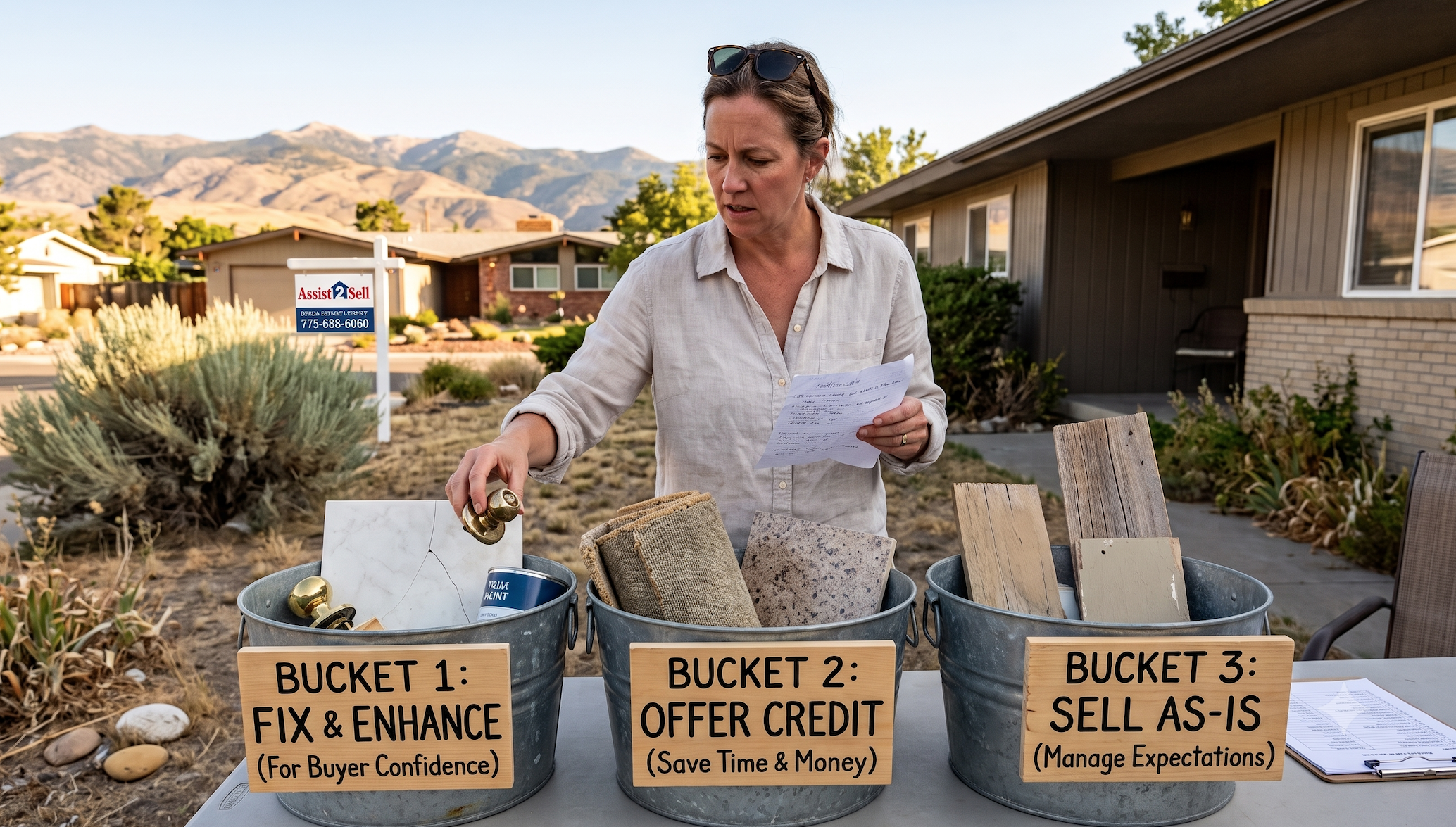
Bucket 1: Fix the Things That Create a Bad First Impression
Some repairs matter because buyers notice them right away. These are often not the biggest or most expensive items; they are the things that make a home feel neglected before a buyer has a chance to appreciate the floor plan, location, yard, or neighborhood.
Examples might include:
Peeling paint near the entry
Loose handrails
Dripping faucets
Broken light fixtures
Missing outlet covers
Doors that stick or do not latch
Yard debris or dead landscaping near the front approach
Obvious pet, smoke, or moisture odors
Dirty windows, baseboards, vents, or ceiling fans
These items can be small, but they affect the story buyers tell themselves. A buyer who sees several little problems may start wondering what else has been deferred.
That does not mean every cosmetic issue needs to be perfect. It means the home should feel cared for. In listing photos and first showings, basic maintenance and cleanliness often do more than a flashy upgrade.
Staging can help buyers visualize a property as a future home. The same principle applies to pre-market repairs: buyers need fewer distractions so they can picture themselves living there.
Bucket 2: Think Carefully Before Taking On Bigger Projects
Larger repairs or improvements need more caution. Replacing flooring, painting the entire interior, updating countertops, changing appliances, repairing fencing, or remodeling a bathroom can improve presentation — but these projects also take time, money, coordination, and judgment.
Before starting bigger work, ask:
Will this help the home look better online?
Online attention matters. If the issue is highly visible, it may affect how many buyers even decide to visit.
Will buyers likely object to it in person?
A tired paint color may be easy to overlook. A strong odor, damaged flooring, or visibly neglected exterior may not be.
Is this a repair, or a design choice?
Repairs solve a problem. Design choices are more personal. Sellers can spend money choosing colors and designs that a buyer would not have chosen.
Will the project delay listing and selling?
In real estate, timing has value. A repair that sounds simple can turn into scheduling delays, contractor callbacks, supply runs, and missed market windows.
Could the issue be handled through price or negotiation instead?
Sometimes, a buyer’s credit or negotiated repair is cleaner than trying to guess what every buyer will want.
The goal is not to make the home brand new. The goal is to make smart, market-aware decisions before spending money.
Bucket 3: Know Which Issues May Become Negotiation Points
Some items do not need to be fixed before listing, but sellers should not be surprised if they come up later.
These may include:
Older roof components
Aging HVAC or water heater systems
Plumbing or electrical concerns
Safety items such as handrails, trip hazards, or missing smoke/CO detectors
Drainage or moisture concerns
Pest, dry rot, or exterior wood issues
Windows, doors, or seals that are clearly failing
Depending on the buyer, loan type, inspection findings, and purchase terms, these issues may become part of the negotiation. A seller might agree to complete a repair, reduce the price, offer a credit where allowed, or decline and keep the sale as-is.
This is where “as-is” can be misunderstood.
Selling “as-is” does not mean buyers stop caring about condition. It usually means the seller is stating they do not intend to make repairs. Buyers can still inspect, ask questions, request concessions, or decide that the condition changes what they are willing to pay.
In other words, “as-is” can be a useful position — but it is not a magic phrase that removes buyer concerns.
Repairs vs. Credits: Which Is Better?
A repair before listing may be better when:
The issue is visible online or at showings
It creates a safety concern
It makes the home feel poorly maintained
It is simple, affordable, and unlikely to create delays
It could shrink the buyer pool if left unresolved
A credit or negotiated solution may be better when:
Buyers may prefer to choose their own finish or contractor
The repair is expensive or difficult to schedule before listing
The scope is uncertain until inspections are complete
The seller wants to avoid starting a project that could snowball
The issue can be clearly disclosed and priced into the conversation
There are limits. Credits and concessions can depend on loan rules, contract terms, lender approval, and the overall structure of the transaction. That is one reason it helps to talk through options before committing to a path.
The Reno-Sparks Seller Prep Question: “What Will This Do to Buyer Confidence?”
Instead of asking, “Should I fix everything?” a better question is:
Will this issue reduce buyer confidence before they understand the value of the home?
If the answer is yes, it may be worth addressing before listing.
If the answer is no, it may be better to disclose, price thoughtfully, and leave room for the buyer’s preferences.
This is especially important for Reno-Sparks homes where buyers may be comparing different ages, neighborhoods, lot types, HOA situations, wildfire/defensible-space considerations, and renovation levels. A home does not have to be perfect, but it should be presented honestly and strategically.
A Simple Pre-Listing Walkthrough Can Prevent Guesswork
Before you spend money, make a list of the items you are considering and walk through them with an Assist2Sell local real estate expert.
A good pre-listing conversation can help you decide:
What should be fixed before photos
What can wait for inspection or negotiation
What should be cleaned, decluttered, or staged instead of replaced
What should be disclosed clearly
What may affect buyer financing or confidence
How repair decisions may affect your likely net proceeds
That last point matters. The best decision is not always the one that produces the prettiest project list. It is the one that supports your timing, your sale price strategy, and what you actually keep at closing.
At Assist-2-Sell Buyers & Sellers Realty, the conversation starts with helping you compare your options. If you are thinking about selling in Reno, Sparks, Spanish Springs, South Reno, Somersett, Midtown, or the surrounding area, a pre-listing walkthrough can help you separate “must-do” repairs from “maybe” projects before you spend money unnecessarily.