
March 2026 Reno–Sparks Real Estate Market Update
Why Home Prices Aren’t Falling (Even When Everything Says They Should)
If you’ve been watching the housing market headlines lately, you’ve probably heard the same story over and over:
“Rates are high… affordability is tight… prices should be falling.”
But here in Reno–Sparks?
That’s not what’s happening.
Home prices are holding steady—and in some cases, surprisingly resilient. So what gives?
Let’s break down the March 2026 numbers, the trends behind them, and what they mean as we head deeper into the spring market.
Market Overview
This update covers the Reno–Sparks metro area and includes single-family residential properties only—homes, townhomes, and condos. It does not include land, multifamily, or commercial properties.
The data reflects activity through February 2026, compared year-over-year with February 2025 to give a true apples-to-apples comparison.
Mortgage Rates: Stabilizing, Not Dropping Fast
Mortgage rates remain the single biggest driver of this market.
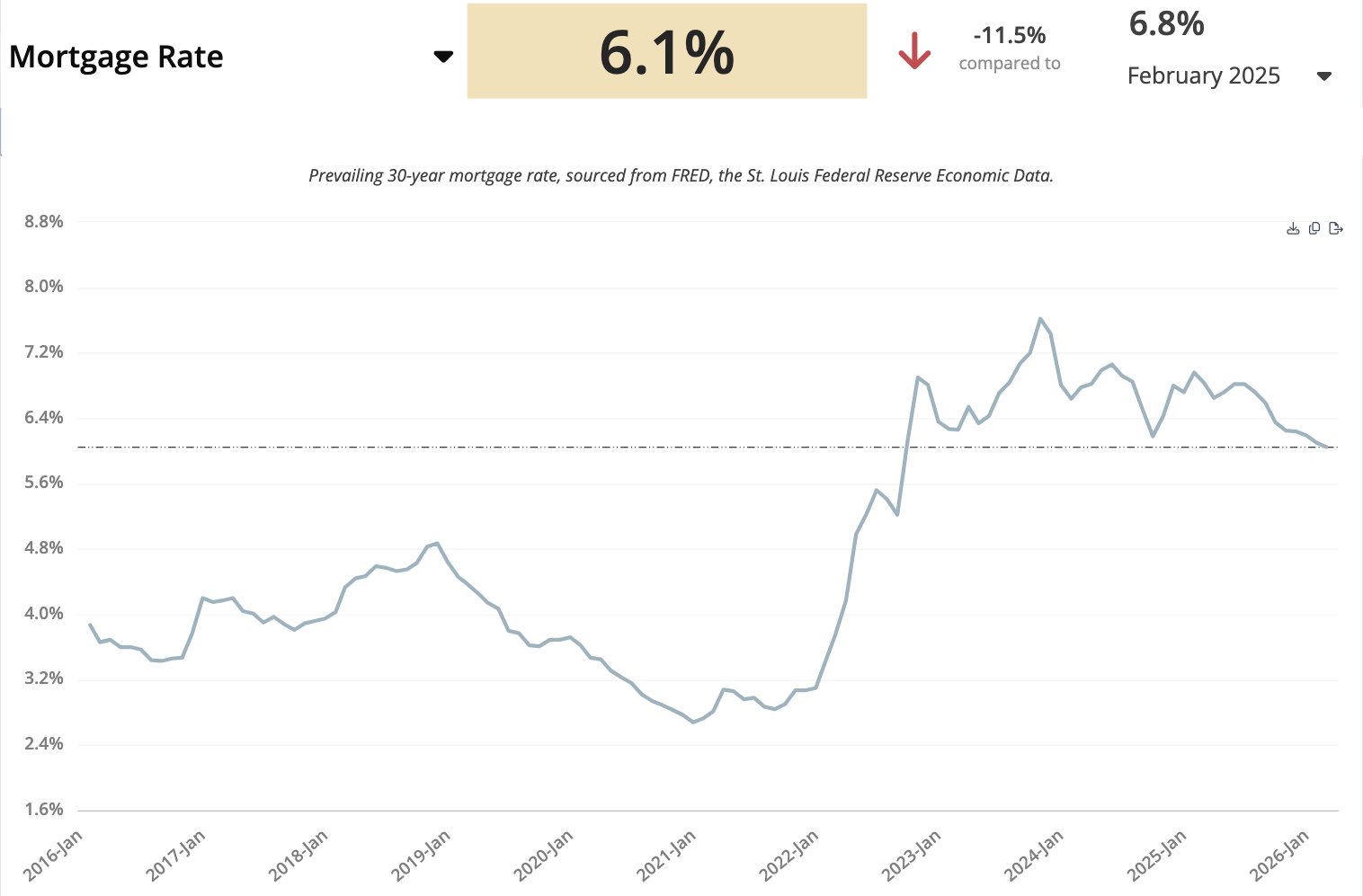
Right now, rates are sitting at 6.1%, down 11.5% from last year’s 6.8%.
That’s meaningful improvement—but not enough to dramatically change affordability overnight.
What’s important here is the trend: rates have come down and are stabilizing. Most expectations point toward rates staying in the 6% to 6.5% range, with a possibility of dipping into the high 5s—but no major collapse.
That stability is a big reason prices aren’t falling.
Home Prices: Holding Firm
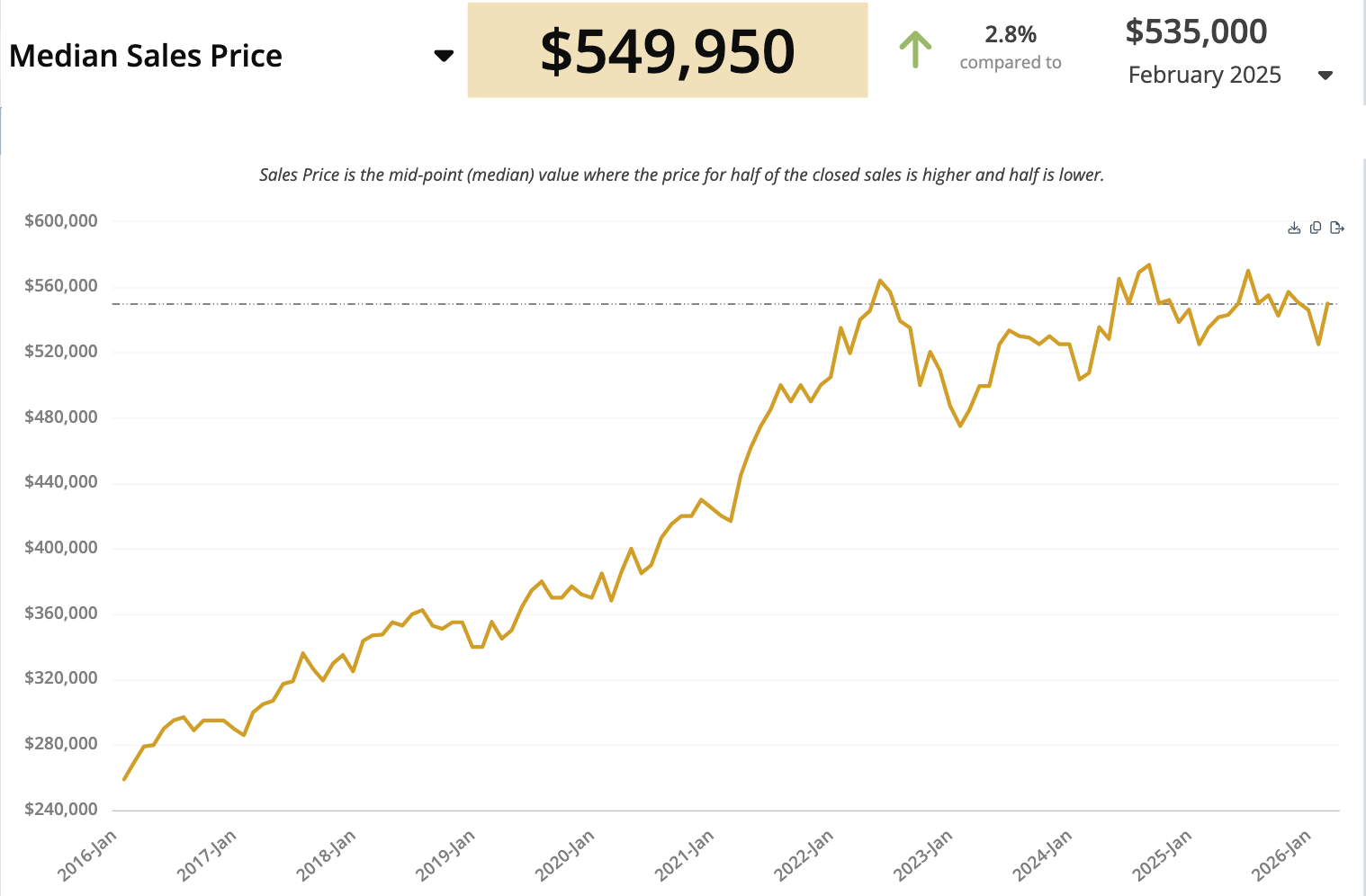
The median home price in Reno–Sparks is now $549,950, up 2.8% year over year.
Instead of dropping, prices are moving within a range—a pattern we’ve seen for the past couple of years. Prices rise during stronger seasonal demand, pull back slightly, and then stabilize again.
This “range-bound” behavior is one of the biggest stories in today’s market.
Prices aren’t crashing… they’re holding.
Mortgage Payments: Improving Slightly
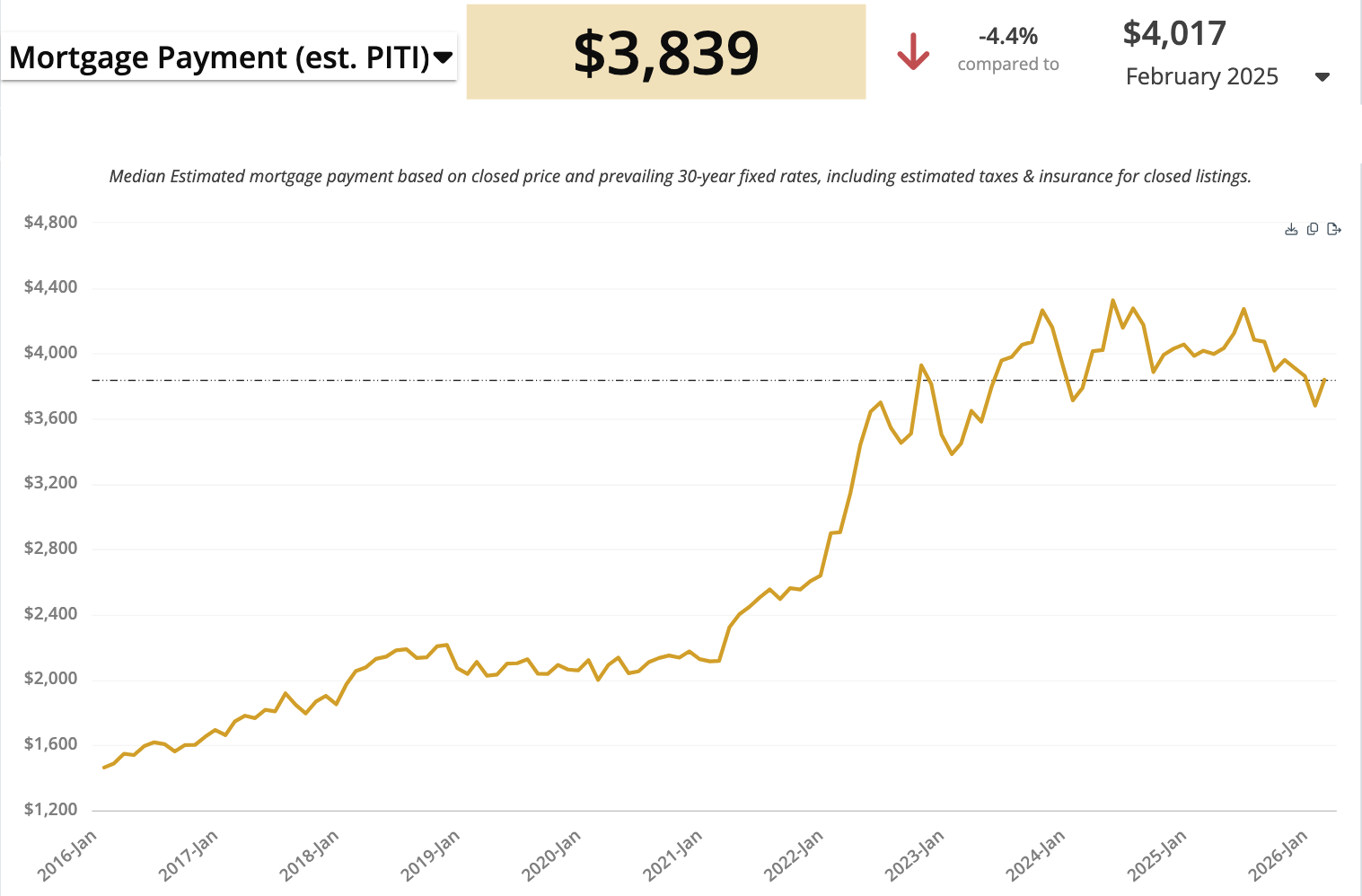
The average estimated mortgage payment is now $3,839, down 4.4% from last year’s $4,017.
That may not seem like a huge drop, but it matters. Lower payments help buyers re-enter the market and support price stability.
Affordability: Moving in the Right Direction
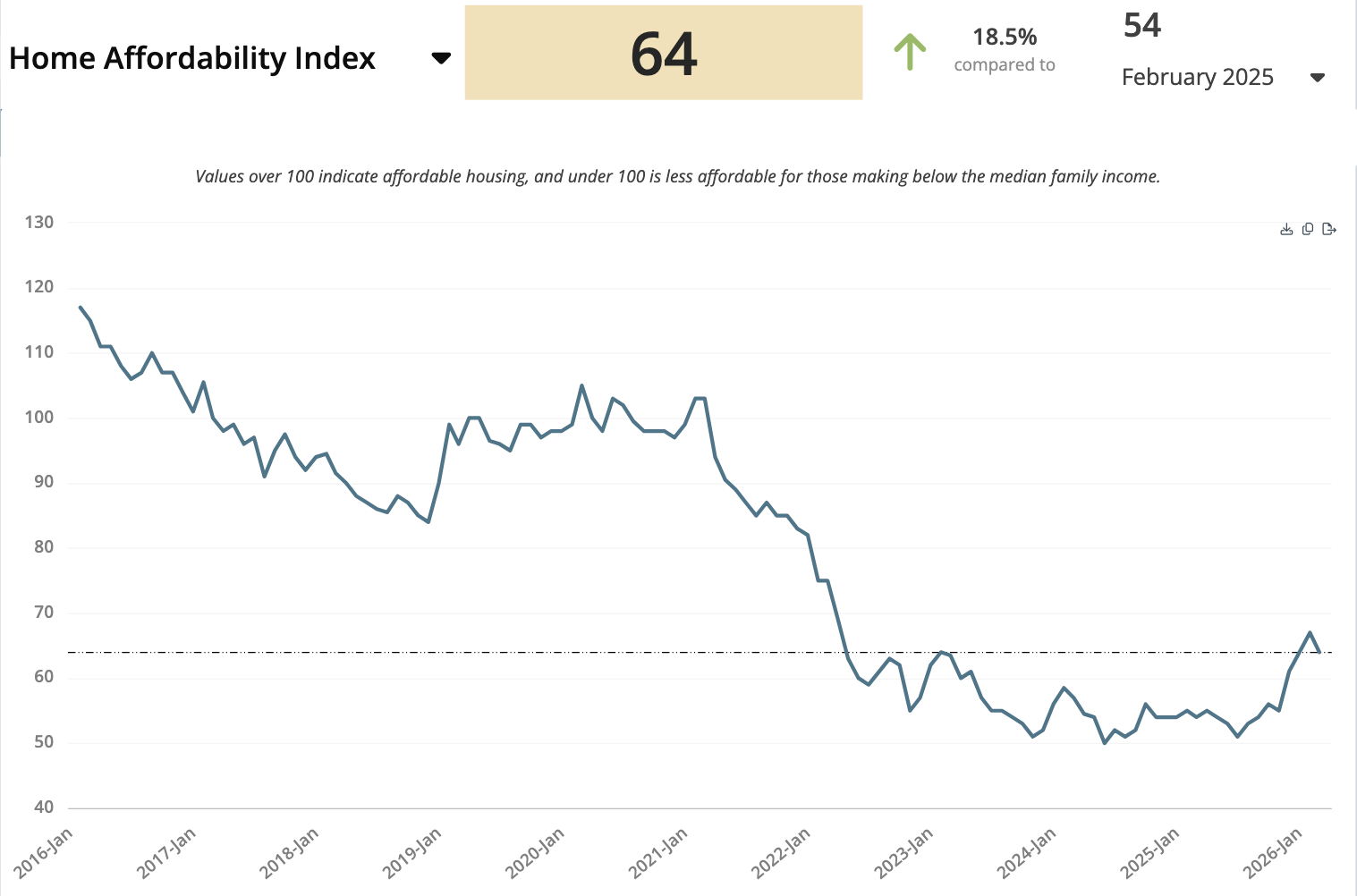
The affordability index currently sits at 64, up 18.5% from last year’s 54.
This means a median-income household can now afford about 64% of the median-priced home.
Still not ideal—but improving.
And that improvement is another key reason prices aren’t falling the way many expected.
Inventory: The Real Story Behind Price Stability
Here’s where things get interesting.
New Listings: 456 homes (down 15.2%)
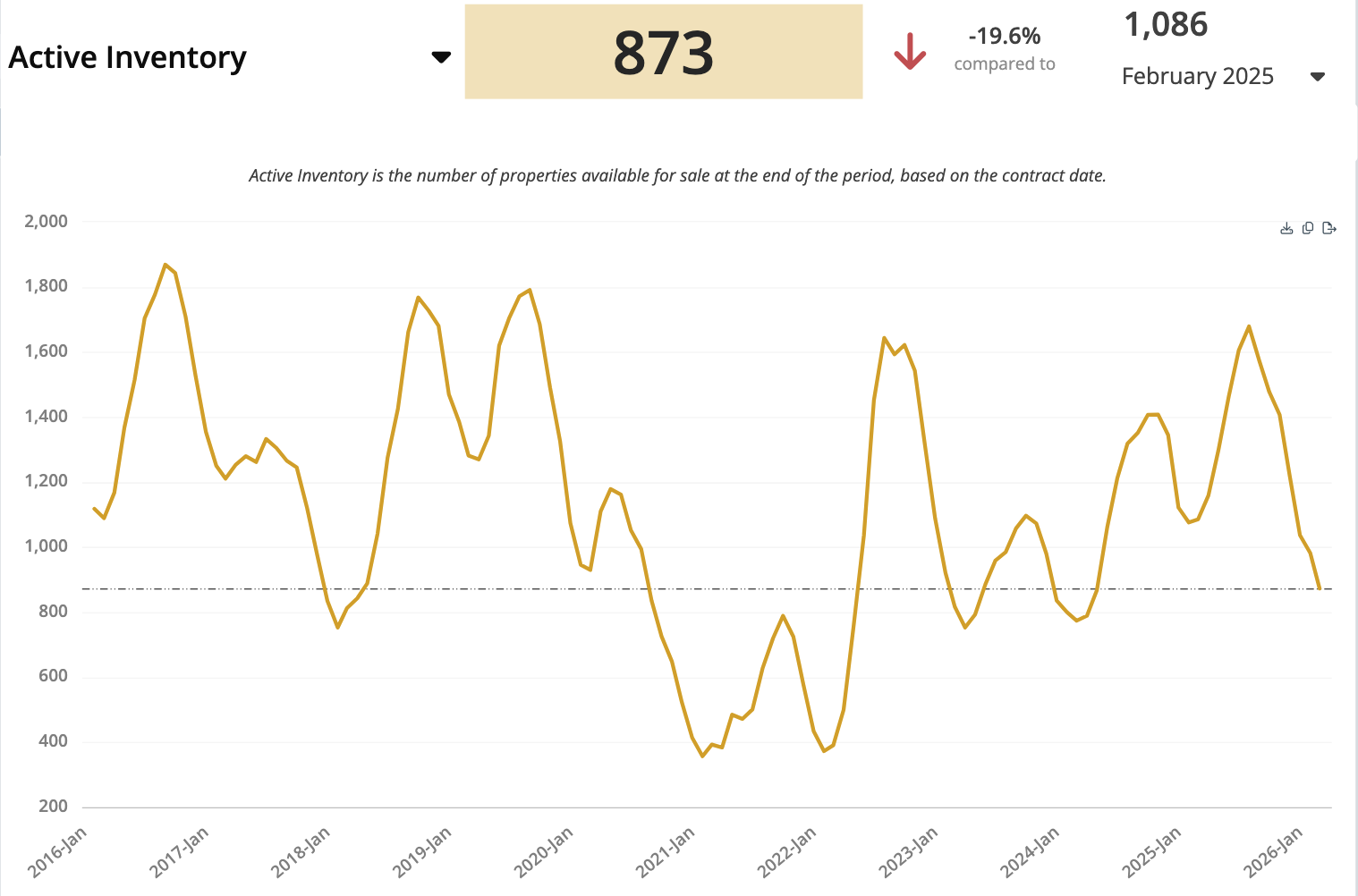
Active Inventory: 873 homes (down 19.6%)
This is the core issue:
There simply aren’t enough homes hitting the market.
Even though demand isn’t booming, supply is even tighter—and that imbalance is keeping prices elevated.
Most of the available inventory is concentrated in higher price ranges, while the most active buyer demand sits between roughly $400K and $650K.
Sales Activity: Steady, But Selective
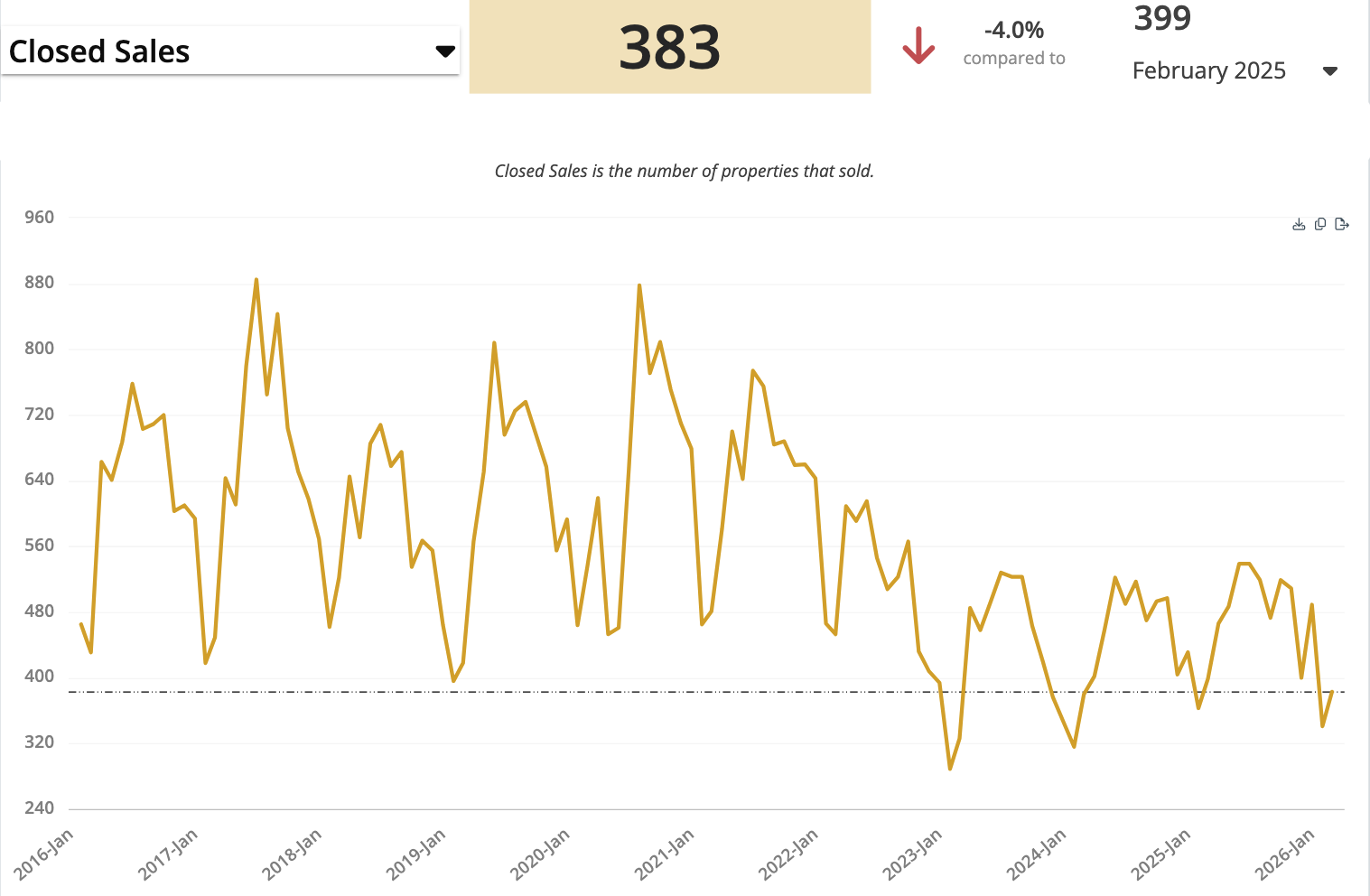
There were 383 closed sales, down 4% year over year.
Sales are not collapsing—but they’re not surging either.
What we are seeing is a more selective buyer.
Homes that are well-priced and in desirable ranges are still selling. Homes that are overpriced—especially in higher price brackets—are sitting longer.
The Price Gap That Matters
One of the most important trends right now is the gap between:
• Homes available (active listings)
• Homes actually selling (closed sales)
This gap is most noticeable in the $650K+ price ranges, where inventory is high but sales are relatively low.
That creates pressure—but only in certain segments of the market.
Meanwhile, lower and mid-range homes remain tighter and more competitive.
Unsold Listings: A Warning Sign (But Not a Crisis)
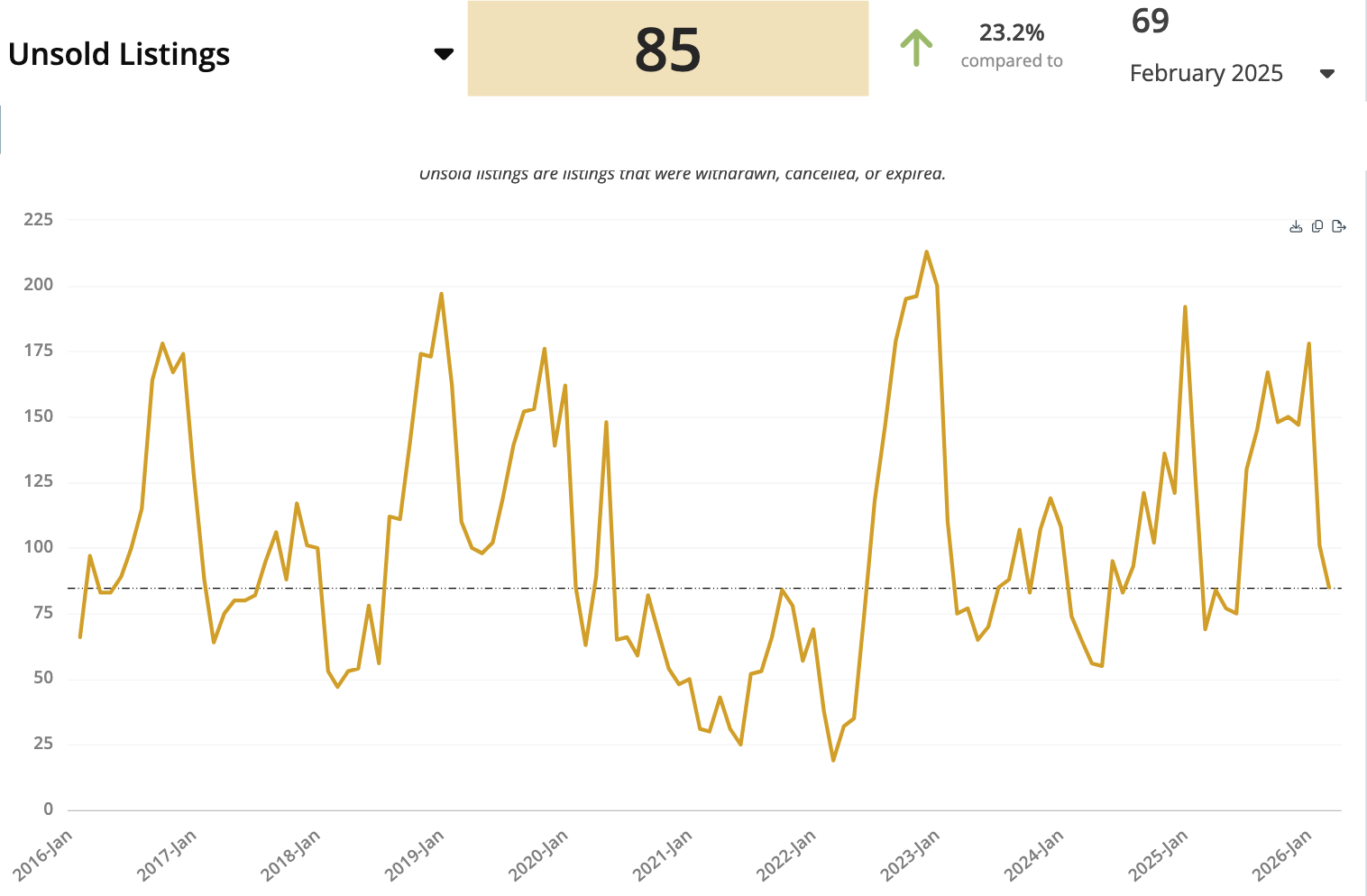
There were 85 unsold listings, up 23.2% from last year.
That’s not a huge number on its own—but in context, it matters.
With only 873 homes on the market, that means roughly 10% of listings didn’t sell.
That’s a signal:
Pricing matters more than ever.
Why Prices Aren’t Dropping
So let’s answer the big question:
Why aren’t home prices falling?
It comes down to three key factors:
1. Limited Inventory
Fewer homes for sale means less downward pressure on prices.
2. Improving Affordability
Lower rates and payments are helping buyers stay in the market.
3. Continued Migration
Reno–Sparks continues to see strong inbound demand—especially from California.
In fact, nearly half of inbound buyers are coming from the Bay Area alone, followed by Los Angeles and Sacramento.
That demand continues to support pricing.
What This Means for Sellers
If you’re thinking about selling, this is still a strong window—but strategy matters.
• Less competition overall
• Stable pricing environment
• Strong demand in mid-price ranges
However:
If you’re priced above $600K–$650K, expect more competition and longer timelines.
Pricing correctly from day one is critical.
What This Means for Buyers
For buyers, this is one of the most balanced markets we’ve seen in years.
• No frenzy
• No bidding wars everywhere
• More time to evaluate options
But: The best deals still move quickly—especially in the most competitive price ranges.
If you find value, don’t hesitate.
The Bottom Line
The Reno–Sparks housing market isn’t following the national narrative.
Prices aren’t falling—because supply is tight, demand is steady, and affordability is improving.
This is a market that rewards strategy, timing, and understanding the data—not assumptions.
The Assist2Sell Advantage
Whether you’re buying or selling, having the right information — and the right strategy — matters.
Assist2Sell offers full-service real estate for just $4,995, or 1% for homes over $500,000, delivering expert representation without overpriced commission costs.
If you’re curious about your home’s value or evaluating a purchase, click “Find Out Now” on our website www.4RenoHomes.com for a quick automated home valuation and a strong starting point.