April 2026 Reno–Sparks Real Estate Market Update .
The Market Should Be Slowing… But It’s Not. Here’s Why.
April is typically when the Reno–Sparks housing market hits its stride. Inventory rises, buyers re-engage, and the spring market takes shape. But in 2026, the story isn’t that simple.
Inventory remains tight. Buyers are more selective. And prices continue to hold in a market that feels like it should be slowing down.
So what’s really going on?
Let’s break down the April numbers, the trends behind them, and what they mean for buyers and sellers heading into the heart of the spring market.
Market Overview
This update covers the Reno–Sparks metro area and includes single-family residential properties—homes, townhomes, and condos. It excludes rentals, multifamily, land, and commercial properties.
Although this is the April 2026 update, the data reflects activity through March 2026, compared year-over-year with March 2025 to provide a true apples-to-apples view of the market.
Mortgage Rates: Stable and Below Historical Norms
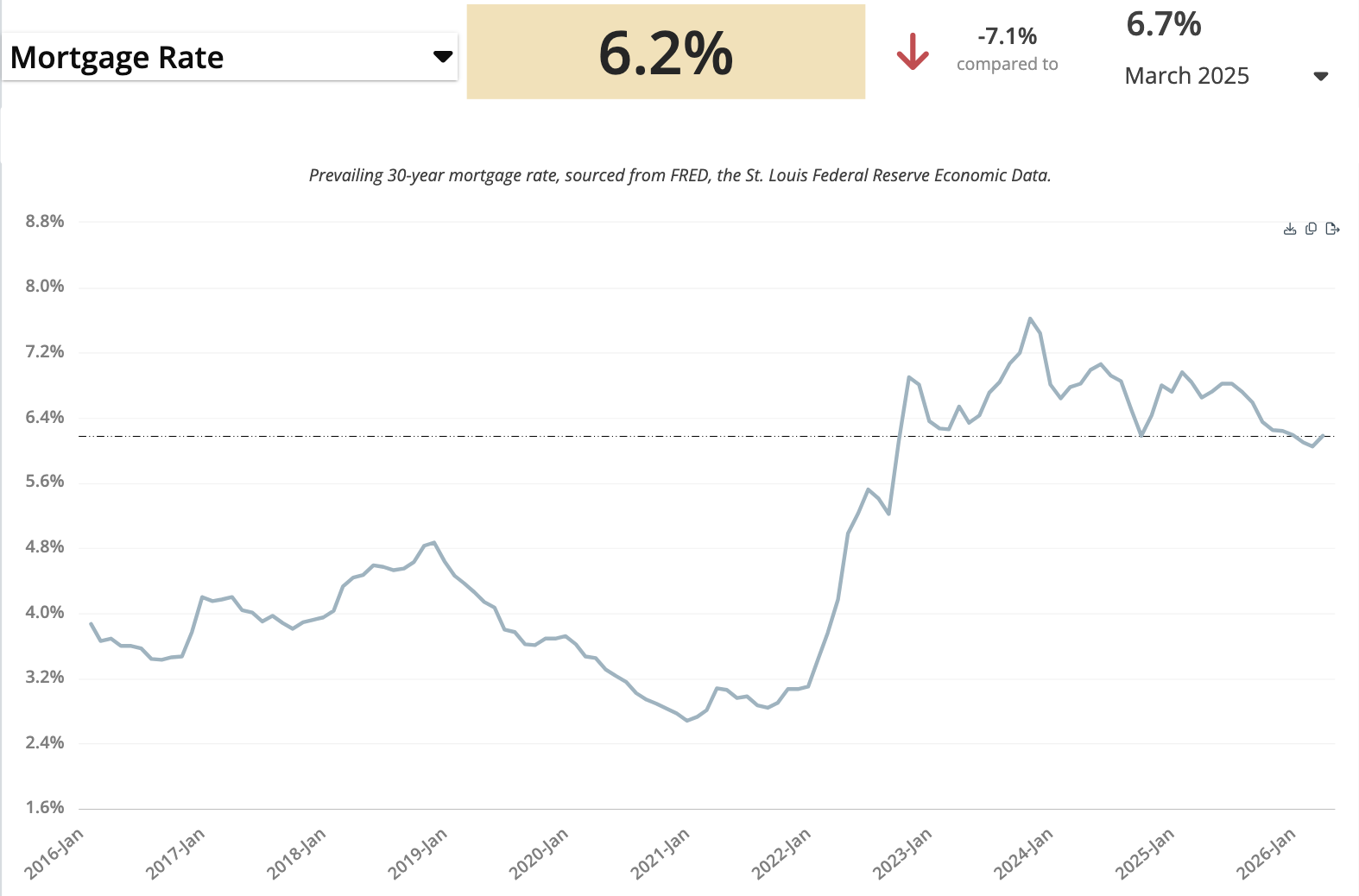
Mortgage rates remain the most influential factor in today’s housing market.
Currently, rates sit around 6.2%, down 7.1% from last year’s 6.7%. While rates have moved up and down over the past two years, they’ve largely settled into a low-to-mid 6% range.
Here’s the important context:
The long-term historical average mortgage rate is about 7.7%.
That means today’s rates—while higher than pandemic-era lows—are still relatively normal by historical standards.
And that stability is playing a major role in keeping the market from slowing dramatically.
Home Prices: Holding Strong in a Tight Range
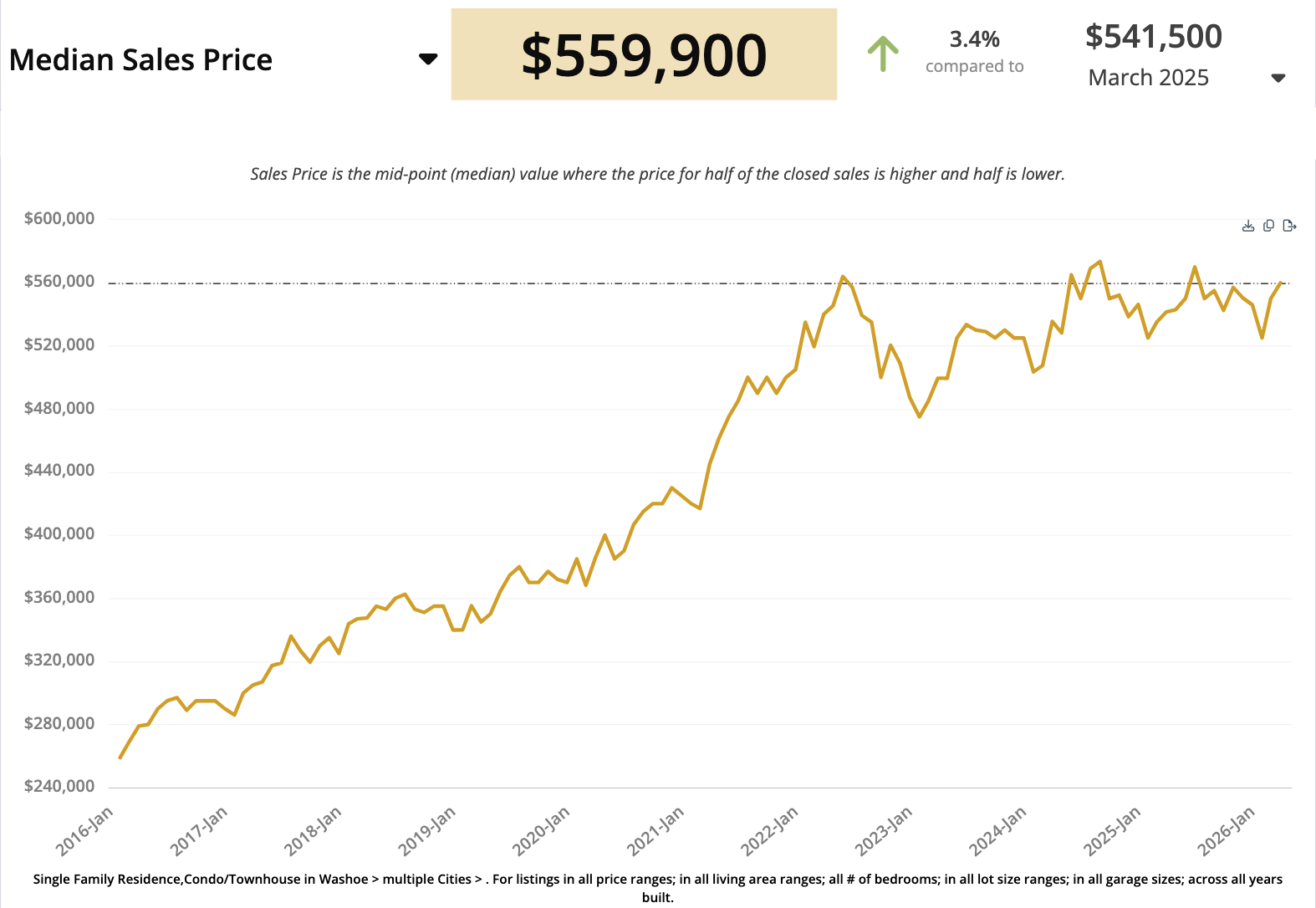
The median home price in Reno–Sparks is now $559,900, up 3.4% year over year.
Instead of rising sharply or falling, prices continue to move within a defined range—bouncing slightly up and down depending on seasonality and demand.
This “range-bound” pricing pattern has been one of the defining characteristics of the market over the past two to three years.
Despite pressure from higher rates and affordability concerns, prices are holding.
Mortgage Payments and Affordability: Slight Improvement
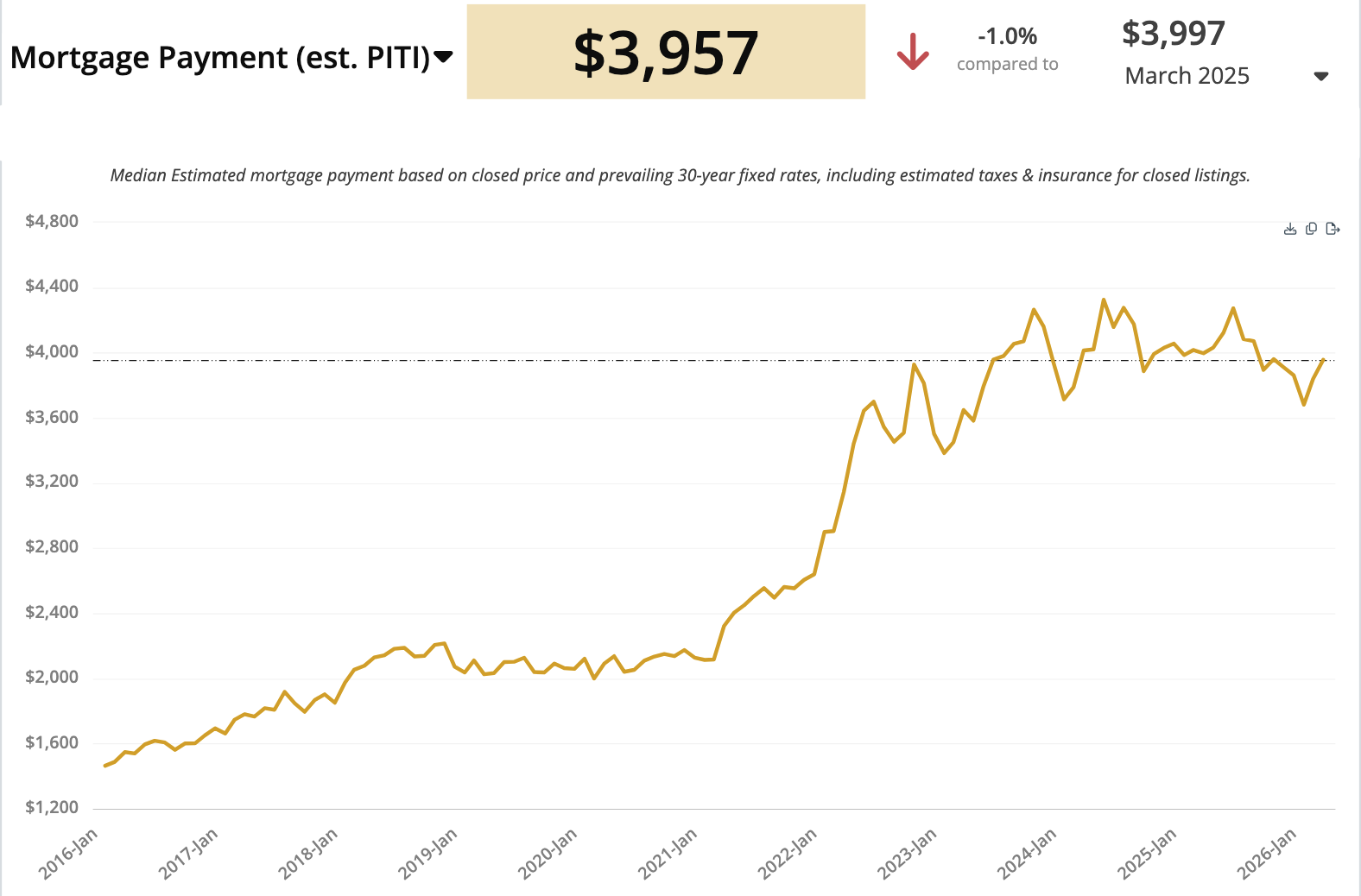
The estimated monthly mortgage payment for a median-priced home is now approximately $3,957, down slightly from last year.
That improvement, combined with stable pricing, is helping support buyer activity.
The affordability index currently sits at 62, meaning a median-income household can afford about 62% of a median-priced home.
While still below ideal levels (typically 80+ for a fully healthy market), affordability is trending in the right direction.
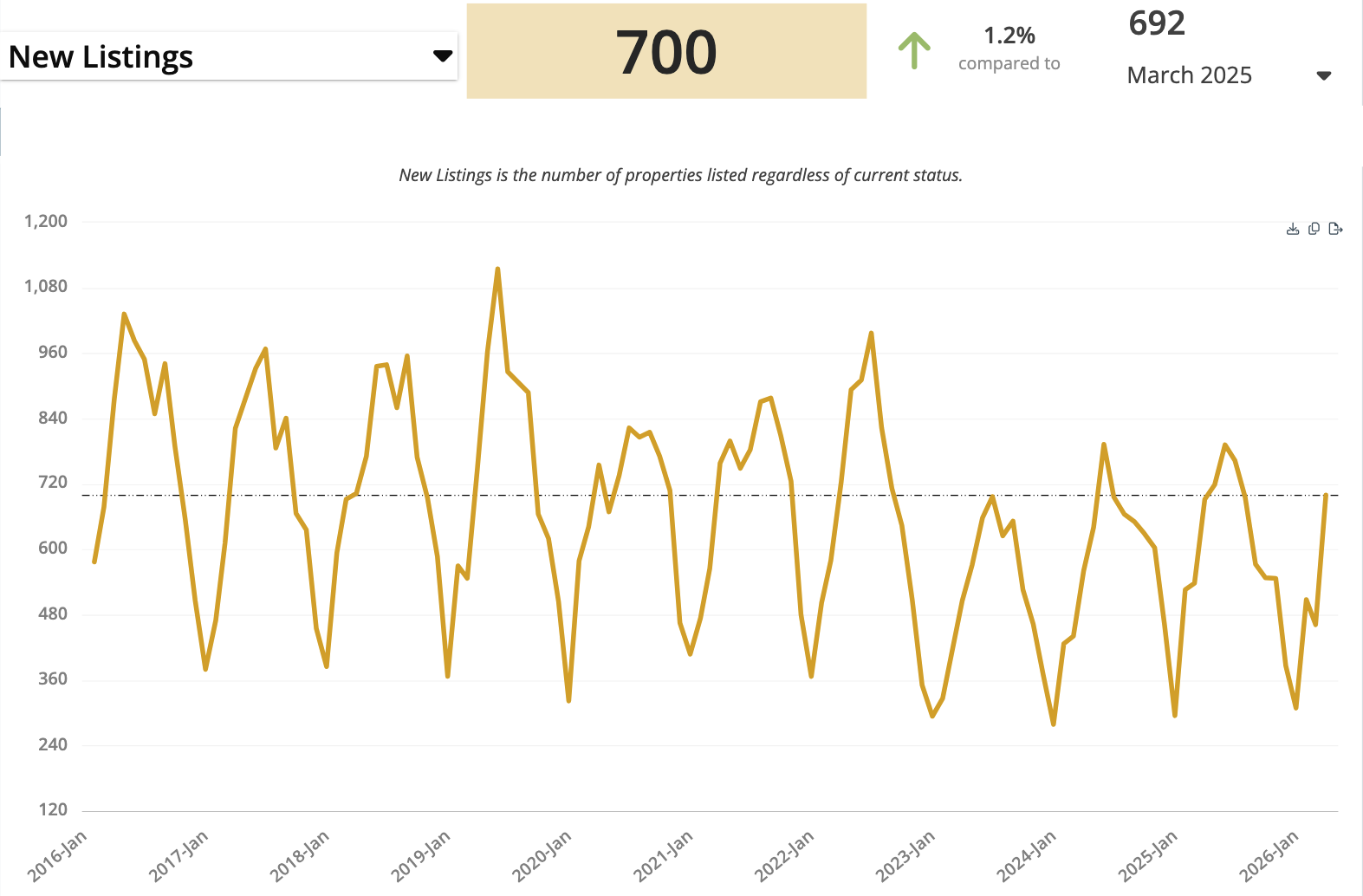
New Listings: Slight Increase, Still Concentrated
In March, 700 new listings came on the market, up 1.2% from last year.
Most new inventory continues to fall within the $400,000 to $700,000 range—the core of the Reno–Sparks market.
As prices rise beyond that range, new listing activity drops off, reflecting affordability limits and a smaller pool of buyers.
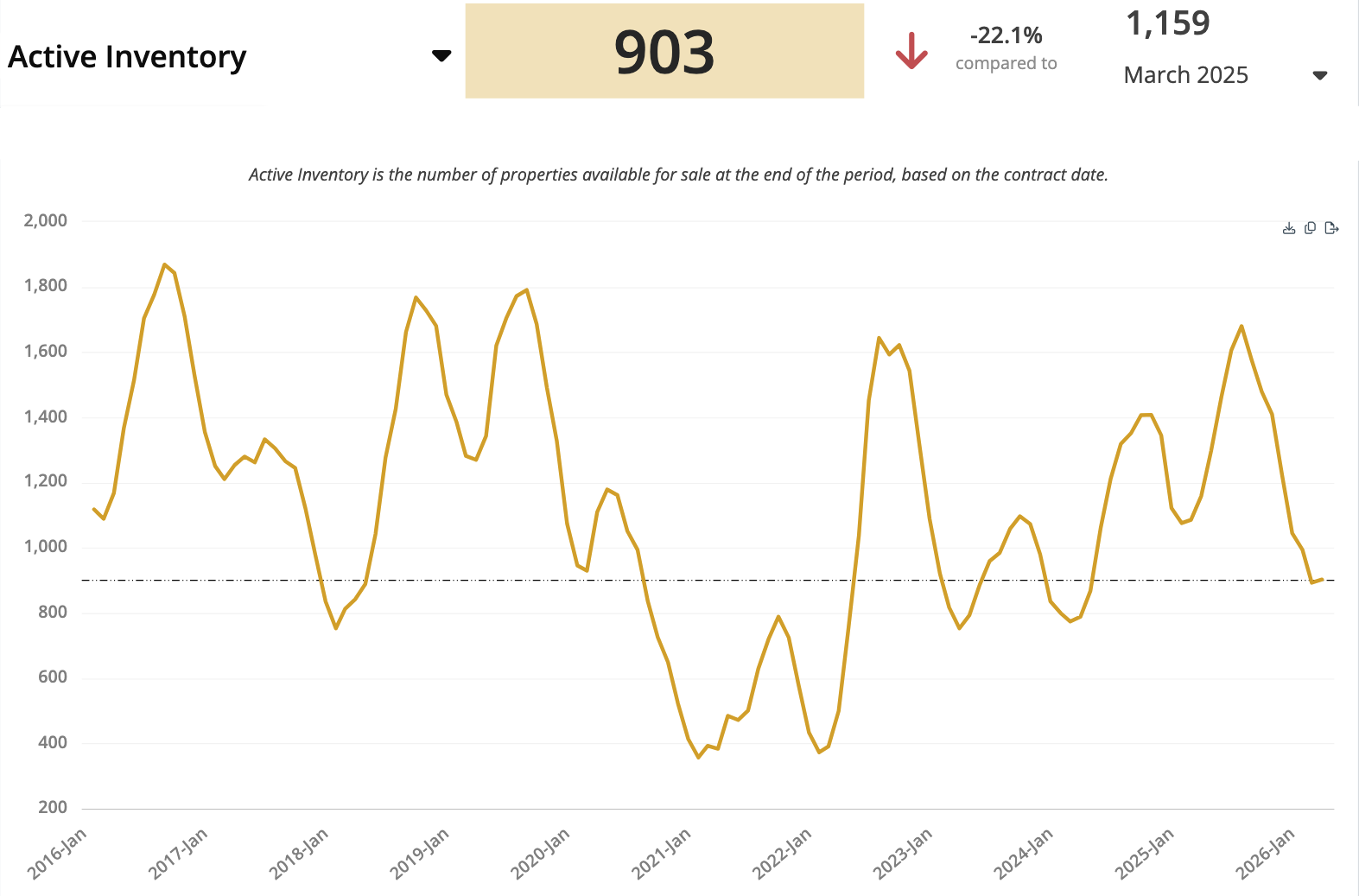
Active Inventory: Still Critically Low
Total active listings currently sit around 900 homes, down 22.1% from last year.
This is one of the most important data points in the entire report.
Even as new listings come on the market, homes are being absorbed quickly—meaning total inventory remains low.
In fact, with 700 new listings but only about 900 total active homes, the market is effectively selling through inventory almost as fast as it’s being added.
That’s a key reason prices are holding.
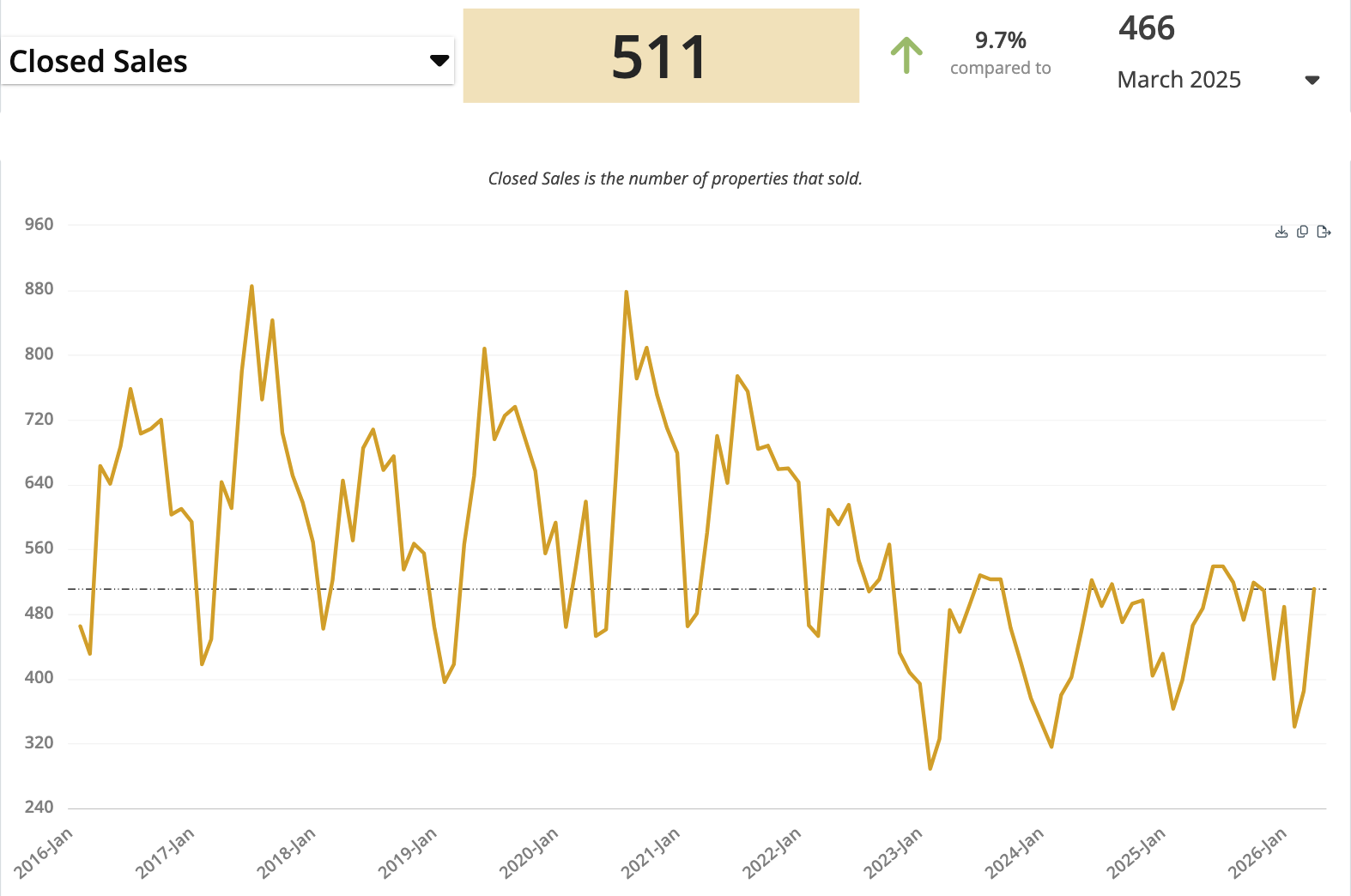
Sales Activity: Strong, But Segmented
There were 511 closed sales in March, up 9.7% from last year’s 466.
Overall, sales activity is healthy—but not evenly distributed.
Most sales are happening in the $400K to $650K range, where demand remains strong.
As prices move higher, sales drop off significantly.
The Market Split: Where Things Get Interesting
This is where the story really begins.
When comparing active listings to closed sales by price range, a clear pattern emerges:
• Lower to mid-range homes (roughly $400K–$650K):
Limited inventory
Strong demand
Consistent sales
• Higher-end homes ($650K+):
More inventory
Fewer buyers
Slower sales
The gap between supply and demand widens as prices increase—and that creates pressure on pricing at the upper end of the market.
This is no longer one market—it’s multiple markets behaving very differently depending on price.
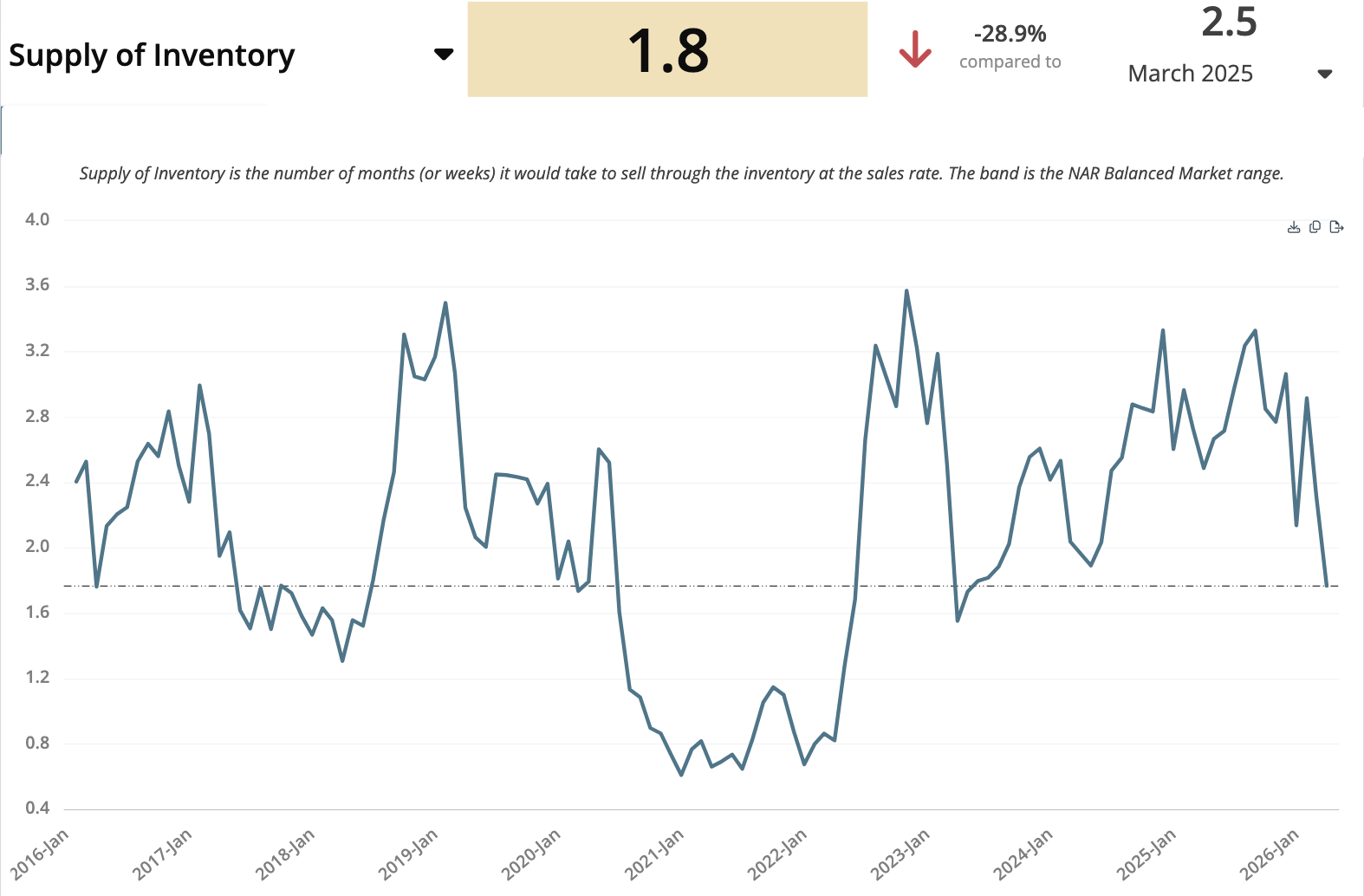
Months of Supply: Extremely Tight
Current months of inventory sits at just 1.8 months.
To put that in perspective:
• A balanced market is typically around 3.5 months
• Above 5 months often signals a slowing market
At 1.8 months, inventory is extremely tight—and that continues to support pricing.
Unsold Listings: Low and Stable
There were 78 unsold listings, slightly down from 84 last year.
Unsold listings—homes that were listed but did not sell—are an important early indicator of market health.
Low unsold inventory suggests that homes are still moving, and sellers are generally aligned with market pricing.
Why Prices Aren’t Falling
So why isn’t the market slowing down the way many expected?
It comes down to a few key factors:
1. Limited Inventory
There simply aren’t enough homes for sale to push prices down.
2. Stable Mortgage Rates
Rates have stabilized in a historically reasonable range.
3. Strong Absorption of Listings
Homes are being purchased nearly as quickly as they come to market.
4. Ongoing Demand
Migration, job growth, and economic expansion continue to support long-term demand.
What This Means for Sellers
For sellers, this remains a strong—but strategic—market.
• Low inventory = less competition
• Stable pricing = predictable outcomes
However, pricing still matters—especially in higher price ranges where competition is greater.
If you’re in the $400K–$650K range, conditions remain very favorable.
If you’re above that, pricing strategy becomes critical.
What This Means for Buyers
For buyers, the market offers both opportunities and challenges.
• Challenge: Limited inventory
• Opportunity: Stable pricing and manageable competition
This is not the chaotic, bidding-war environment of recent years.
Buyers have more time to evaluate—but must act when they find the right property.
The Bottom Line
The Reno–Sparks housing market isn’t slowing the way many expected.
It’s stabilizing.
Prices are holding because supply is tight, demand is steady, and affordability is improving—just enough to keep the market moving.
Understanding these dynamics is the key to making smart decisions in today’s environment.
The Assist2Sell Advantage
If you’re thinking about buying or selling, having the right strategy—and the right team—makes all the difference.
Assist2Sell offers full-service real estate for just 1.5%, helping sellers save thousands while still getting expert marketing, exposure, and representation.
If you’d like to know what your home is worth or evaluate a property you’re considering, use the “Find Out Now” tool on our website to get a quick valuation and get started.
Assist2Sell — Way Smarter.